China has become a major force in the global Solar Array Tracking System market. Its manufacturers serve utility-scale projects across Asia, Europe, the Middle East, Africa, and Latin America. This introduction examines ten leading Chinese suppliers and their practical strengths.
The comparison considers tracker design, control accuracy, wind resistance, corrosion protection, installation speed, and after-sales support. It also reviews manufacturing capacity, certification, project experience, and system compatibility. These details matter in the field. A tracker may look impressive in a brochure, yet perform poorly on uneven ground or under strong coastal winds.
NREL solar analyst David Feldman has emphasized, “Solar value depends on more than module efficiency.” That principle also applies to tracking systems. Better movement does not always mean better project returns. Electricity prices, terrain, maintenance access, and local weather can change the result.
The companies discussed here include established suppliers and fast-growing specialists. Some offer advanced electronic controls. Others compete through simple structures, lower costs, or strong domestic service networks. Their positions are not permanent. Public rankings may differ because manufacturers disclose different levels of data.
A careful buyer should request verified yield studies, wind-load calculations, warranty terms, and operational references. Factory scale is useful. It is not everything. Field reliability still requires closer inspection. This guide therefore aims to be practical, balanced, and honest about uncertainty while identifying China’s most notable Solar Array Tracking System manufacturers.
What Is a Solar Array Tracking System?
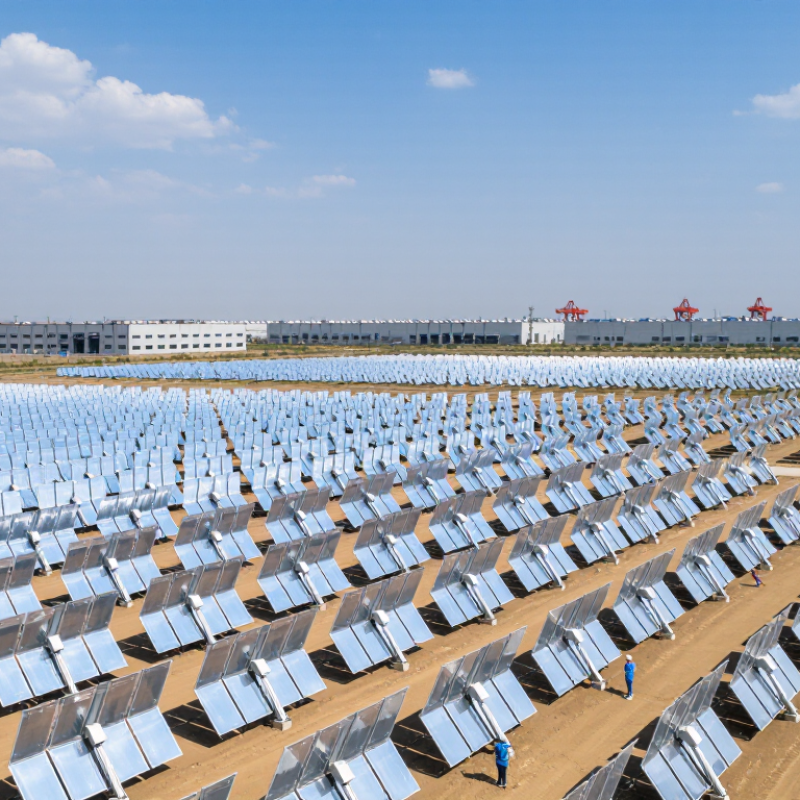
A solar array tracking system changes the panels’ angle as the sun crosses the sky. It uses motors, control software, and position sensors to follow sunlight. Fixed panels face one direction all day. Tracking panels keep adjusting their orientation. The movement is usually east to west each day. Some advanced systems also change the tilt angle.
Single-axis trackers
rotate around one horizontal line. They are common in large, open solar fields. Dual-axis trackers move in two directions. They can capture more sunlight, especially at higher latitudes.
However, they need more equipment, stronger foundations, and careful maintenance. A practical design must match the site’s wind, soil, terrain, and climate. More movement does not automatically mean better performance.
Small details matter. A misaligned sensor can reduce output across many rows. Dust may block the sensor’s reading. Wind controls must place the array in a safer position during storms. Technicians should inspect bearings, cables, bolts, and motor responses regularly.
Tracking can increase energy production, but it also increases operating complexity. In some projects, extra power does not justify the added cost. That judgment deserves real measurements, not attractive estimates. The best system is not always the most advanced one.
China’s Solar Array Tracking System Manufacturing Landscape
China’s Solar Array Tracking System Manufacturing Landscape
China’s solar array tracking system sector combines large-scale fabrication with rapidly improving control technology. Manufacturers commonly produce single-axis trackers for utility-scale projects, where land use, wind exposure, and maintenance access shape the design. Steel forming, torque-tube welding, drive assembly, and controller integration often occur within connected supply networks. This structure supports competitive pricing and shorter production cycles. However, factory capacity does not always prove field reliability. Project owners should examine independent test records, component traceability, and installation references from similar climates.
Engineering quality depends on local conditions. Coastal projects need stronger corrosion protection, while northern sites may require snow-load analysis and low-temperature testing. Tracking algorithms should respond smoothly to wind alarms, row shading, and communication loss. A practical inspection includes bolt torque, actuator alignment, grounding continuity, and emergency stow performance. Some suppliers still understate maintenance demands. That deserves careful questioning.
Tips: Request climate-specific calculations before signing. Check spare-part availability near the project site. Ask how software updates are verified and recorded. Compare warranty terms with actual service response times. A small pilot section can reveal alignment problems, dust exposure, and unexpected control faults before full deployment. Mistakes still happen, even in well-managed projects.
Top 10 Solar Array Tracking System Manufacturers in China
China’s top 10 solar array tracking system manufacturers serve utility-scale, commercial, and industrial projects. Their systems adjust panel angles through the day, improving sunlight capture and reducing avoidable energy losses. Reliable manufacturers usually provide structural design, drive units, controllers, monitoring software, and installation guidance. Project experience matters. A supplier that has tested trackers in strong wind, dust, heat, and heavy rain can offer more practical engineering evidence.
Tips: Check the tracker’s wind-load rating, row spacing, motor protection, and spare-parts plan. Ask for test reports and operating data from similar climates. Do not judge quality by price alone.
When comparing the top 10 solar array tracking system manufacturers in China, buyers should examine factory capacity, quality-control procedures, and after-sales response times. Independent certification can support technical claims, but it should not replace site-specific evaluation. Confirm foundation requirements, terrain adaptability, communication protocols, and maintenance access before signing a contract. A clear warranty should cover key mechanical and electronic components.
Some projects need single-axis tracking, while others may justify more complex designs. The cheapest layout may create difficult cleaning or repair work later. This is easy to underestimate. Manufacturers should explain expected energy gains using local solar data, not broad marketing averages. Buyers should also request a complete bill of materials and a commissioning schedule. Field inspections remain valuable, because polished documents cannot reveal every weakness in real operating conditions.
China Top 10 Solar Array Tracking System Manufacturers
China’s rapidly expanding solar photovoltaic market creates strong demand for utility-scale solar array tracking systems. The chart below shows China’s annual newly installed solar PV capacity from 2020 to 2024, providing market context without displaying company or brand data.
Source: National Energy Administration of China. Capacity is measured in gigawatts (GW).
Conclusion
This article provides a practical overview of the Solar Array Tracking System, explaining how it adjusts panel orientation to follow the sun and capture more sunlight throughout the day. It examines the main tracking configurations, operating principles, and the ways these systems can improve energy yield, land utilization, and overall project performance compared with fixed-tilt installations. The discussion also considers important factors such as terrain, climate, maintenance needs, structural reliability, and control technology.
The article then explores China’s solar tracking manufacturing landscape and introduces ten leading categories of manufacturers without focusing on specific brand names. It highlights their capabilities in engineering, production, testing, automation, customization, and after-sales support. Finally, it offers a framework for evaluating Chinese suppliers by comparing product quality, technical certifications, environmental adaptability, delivery capacity, warranty policies, service networks, and long-term operating value, helping project developers make informed and practical procurement decisions.
 Zhaori
