Advanced Flat Single Axis Solar Tracking System
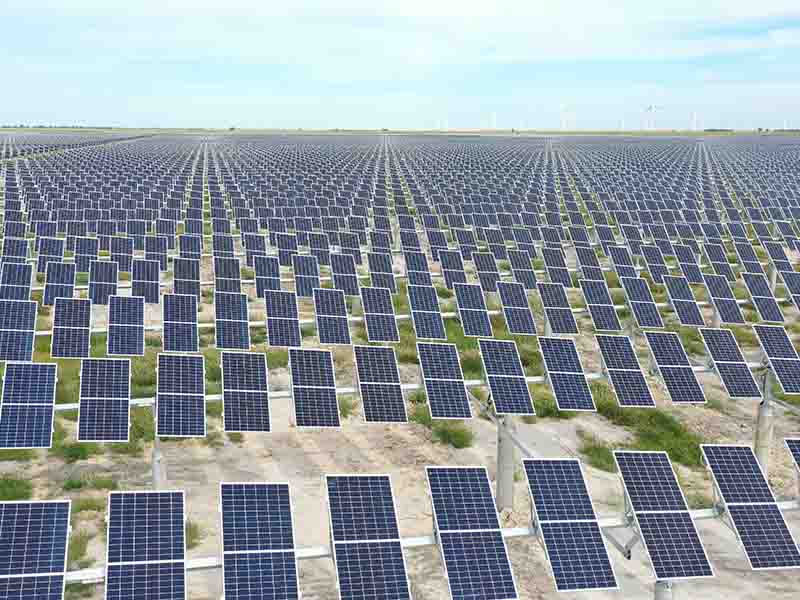
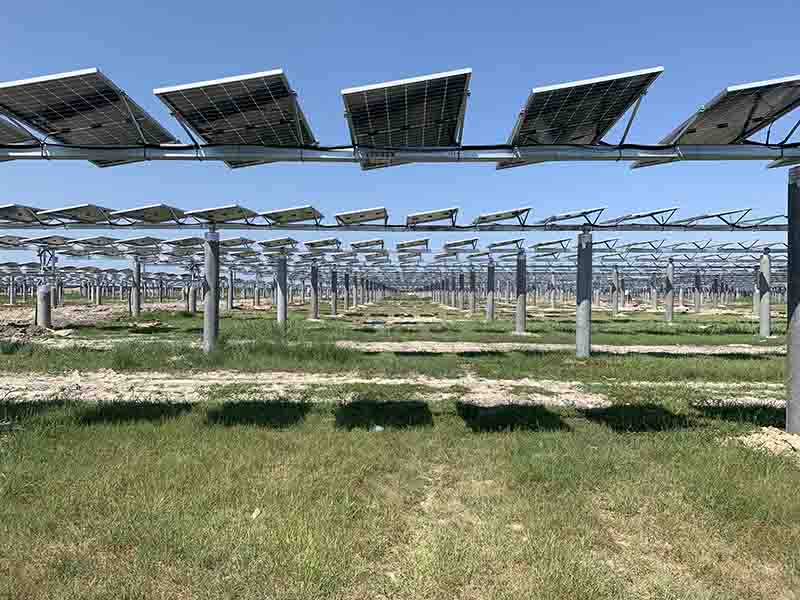
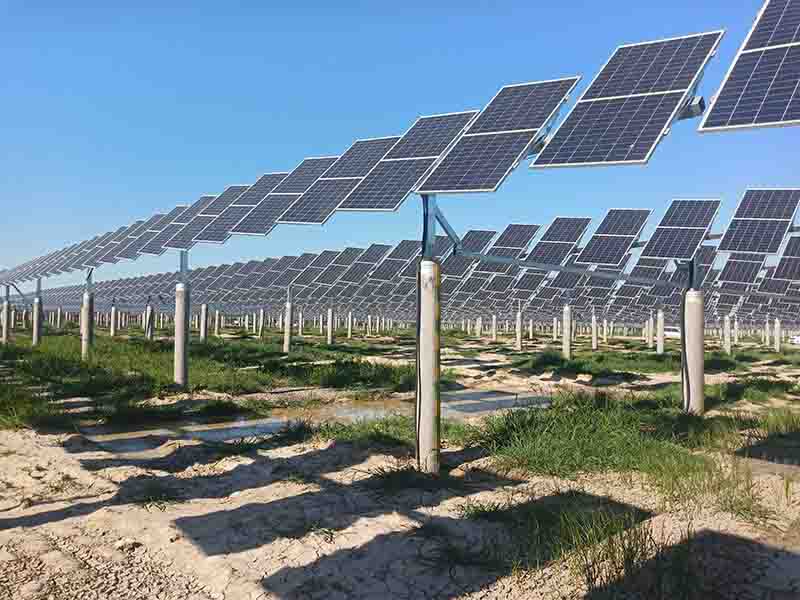
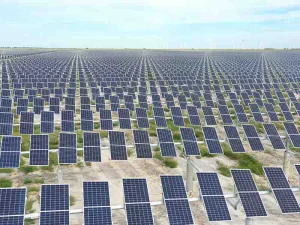
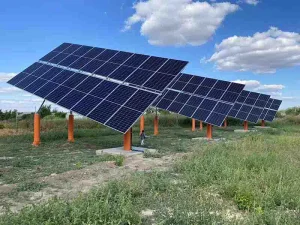
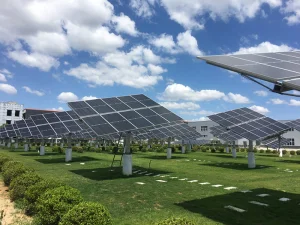
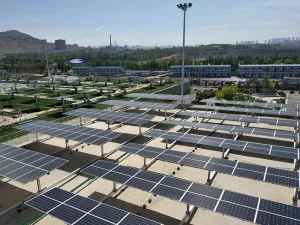
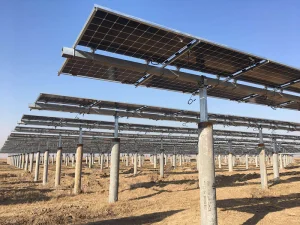
The flat single axis solar tracking system with tilted modules is an innovative combination of traditional flat single axis and tilted single axis tracking technologies. This system features a flat axis that tracks the sun's trajectory from east to west, while the solar modules are installed at a fixed tilted angle of 5 to 10 degrees. This specific design is primarily engineered for medium and high latitude regions, effectively increasing power generation efficiency by approximately 20%.
⚙️
Dual Tracker Options
Available in centralized and decentralized configurations. Centralized systems use a single motor for multiple rows, while decentralized systems utilize one motor per row for independent adjustment.
🛡️
Robust Protection
Equipped with a self-developed stainless steel shell linear actuator. Features internal and external protection with a rubber dust ring for harsh outdoor environments.
⚡
High Stability
Includes a reverse self-locking function and strong impact resistance, ensuring stable operation, large torque output, and low maintenance costs.
Technical Specifications
| Control Mode |
Time + GPS |
| System Type |
Independent drive / 2-3 rows linked |
| Average Tracking Accuracy |
0.1° - 2.0° (adjustable) |
| Gear Motor |
24V / 1.5A |
| Output Torque |
5000 N·M |
| Tracking Power Consumption |
0.01 kWh/day |
| Azimuth Angle Tracking Range |
± 50° |
| Solar Module Tilted Angle |
5° - 10° |
| Max. Wind Resistance (Horizontal) |
40 m/s |
| Max. Wind Resistance (Operation) |
24 m/s |
| Main Material |
Hot-dipped galvanized steel ≥ 65μm |
| System Warranty |
3 years |
| Working Temperature |
-40℃ — +75℃ |
| Weight Per Set |
160KGS - 350KGS |
| Total Power Per Set |
4kW - 20kW |
Frequently Asked Questions
How does the tilted module design benefit power generation?
By combining a horizontal tracking axis with a 5-10 degree fixed tilt, the system captures more solar radiation in medium and high latitude regions, increasing energy yield by about 20% compared to fixed structures.
What is the difference between centralized and decentralized tracking?
Centralized trackers use one motor to drive multiple rows via a driveline, making it cost-effective for large segments. Decentralized systems provide a motor for every row, allowing for independent movement and easier installation on uneven terrain.
Is the system durable enough for extreme weather?
Yes, the system is built with hot-dipped galvanized steel and a stainless steel shell linear actuator. It can withstand horizontal winds up to 40 m/s and operate in temperatures ranging from -40°C to +75°C.
What level of maintenance does the tracking system require?
The system is designed for low operation and maintenance costs. The driving system features self-locking capabilities and high-grade protection against dust and impact, reducing the frequency of required service.
How accurate is the sun tracking?
The system utilizes a Time + GPS control mode to achieve a high tracking accuracy ranging from 0.1° to 2.0°, which is fully adjustable based on specific site requirements.
What is the daily power consumption of the tracker itself?
The system is extremely energy-efficient, consuming only approximately 0.01 kWh per day for tracking operations.
 Zhaori