Engineered to deliver high performance, stability, and customized orientation for island environments.
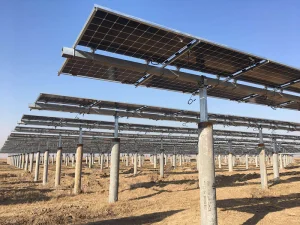
Designed for flat terrains, this tracking system increases solar harvesting capability by tracking the sun's trajectory with unmatched accuracy.
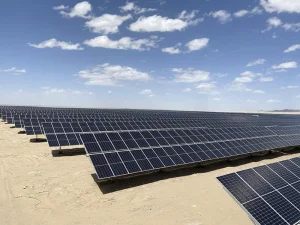
A cost-effective, heavy-duty adjustable structure. Allows seasonal angle optimizations to elevate power generation on complex terrains.
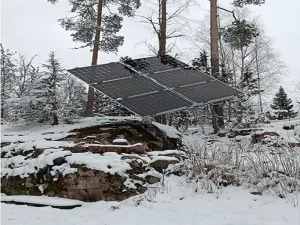
Equipped with smart algorithms to track elevation and azimuth angles. Minimizes shadows and boosts solar yield up to 35%.
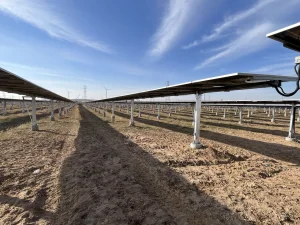
Our standard 1P configuration maximizes landscape layout space, featuring high structural rigidity and low foundation costs.
In remote, high-wind, and high-salinity microgrid scenarios such as those found in the Takamaka district of Seychelles, solar system designers face unique environmental constraints. While fully automated dual-axis trackers yield the absolute maximum energy, the long-term operations and maintenance (O&M) cost in remote islands can challenge the system's ROI. The Manual Adjustable Solar Rack represents a highly durable compromise.
By utilizing high-strength structural profiles with simple manual adjustments (typically configured for seasonal tilt changes 2 to 4 times a year), project developers achieve an optimized power generation curve without the vulnerability of sensitive electronics, sensor arrays, or heavy power-consuming electric motors. This whitepaper analyzes the structural engineering, localization advantages, global supply chains, and manufacturing technologies that drive high-efficiency solar deployment.
"In coastal island conditions, mechanical simplicity equates to high reliability. The elimination of motorized actuators reduces structural failure rates in salty, humid marine environments to nearly zero, while manual adjustability still recaptures up to 8% to 15% of the losses associated with static fixed brackets."
Takamaka, situated on the southern coast of Mahé, Seychelles, experiences a tropical rainforest climate characterized by high humidity, constant marine salt spray, and occasional tropical cyclones. Developing utility-scale or high-performance commercial and industrial (C&I) solar arrays here requires components capable of resisting structural degradation.
The proximity to the Indian Ocean exposes steel frames to continuous sodium chloride particles. Standard structural metal racks deteriorate rapidly. To mitigate this risk, Shandong Zhaori New Energy's manual adjustable brackets undergo hot-dip galvanization (thickness exceeding 85 microns) or are constructed from structural anodized aluminum alloy (AL6005-T5). This secures a design lifespan of 25+ years in aggressive C5-M marine environments.
Island configurations require wind-resistant design criteria. Cyclonic conditions demand racks that can be set manually to a "safe stow angle" (typically horizontal or highly shallow tilt) prior to storm landfall. Manual adjustable solar racks allow operations crews to drop tilt angles to minimum exposure values within minutes, protecting both the modules and the foundations from extreme uplift forces.
Worldwide demand for utility-scale racking systems is shifting toward high flexibility. While automatic single-axis trackers dominate flat, desert landscapes in Western USA, Australia, and the Middle East, manual adjustable brackets are gaining traction in rugged, mountainous terrains and isolated islands across Southeast Asia, the Caribbean, and Africa.
Shandong Zhaori New Energy Tech. Co., Ltd. leverages state-of-the-art production lines to support the global solar supply chain. Founded in June 2012, the company features integrated manufacturing facilities covering over 50,000 square meters.
With modern CNC machinery, advanced laser cutter configurations, automated welding robots, and plasma processing stations, the company maintains a monthly manufacturing throughput of 500MW. This vertical integration allows strict control of raw material screening, precision cold-forming, thermal anti-rust coating applications, post-processing, structural tolerance inspection, and secure containerized packaging.
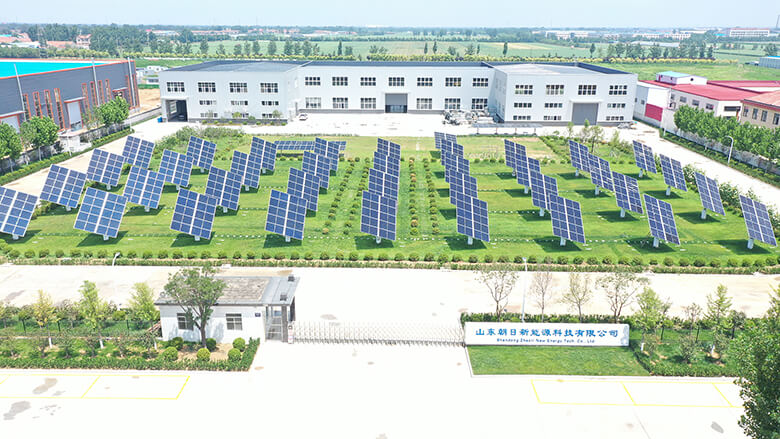
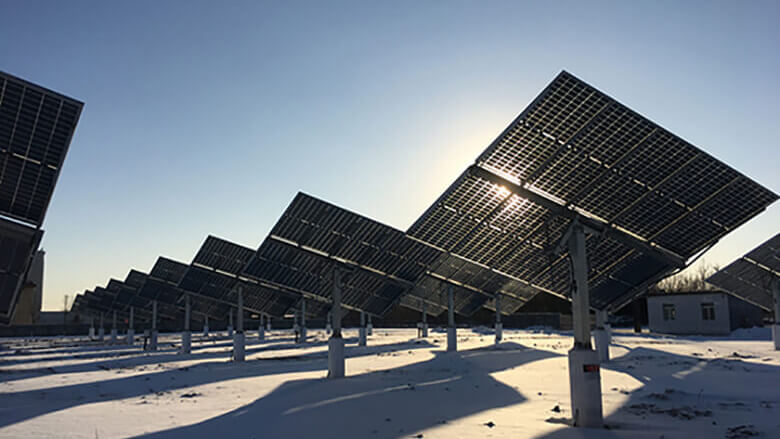
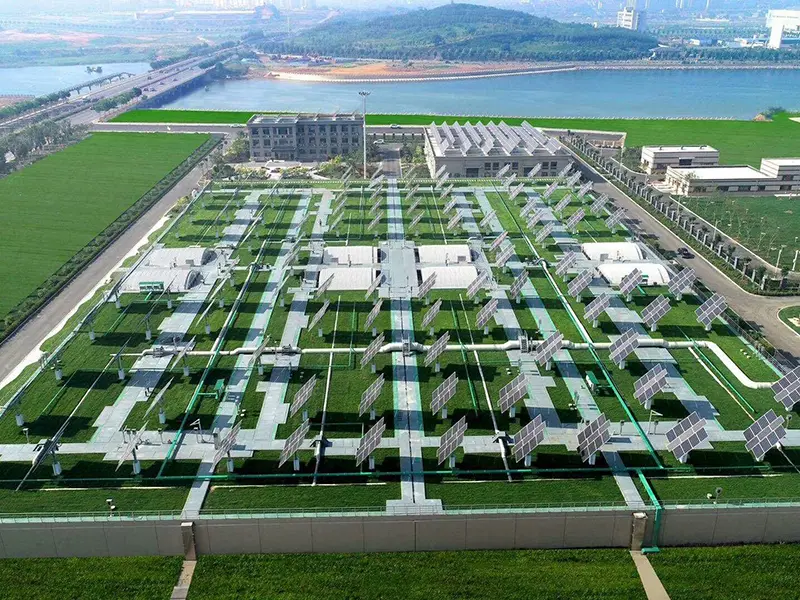
By designing intellectual properties verified under global testing matrices, Shandong Zhaori New Energy holds invention patents across major legal jurisdictions—including the European Patent Office, United States, Canada, Australia, Japan, South Korea, India, Brazil, and South Africa, alongside 8 Chinese National Invention Patents.
When selecting solar mounting frameworks for commercial projects in Seychelles or globally, quantitative engineering comparisons help optimize long-term asset value. Below is a structural and yield performance matrix comparing different configuration options:
| Structural Parameters | Fixed Tilt Racks | Manual Adjustable Racks | Single-Axis Trackers | Dual-Axis Trackers |
|---|---|---|---|---|
| Yield Gain (vs. Fixed) | Baseline (0%) | +5% to +12% | +15% to +25% | +30% to +40% |
| Wind Load Threshold | Up to 60 m/s | Up to 60 m/s (Adjustable) | Up to 45 m/s | Up to 40 m/s |
| O&M Requirements | Extremely Low | Low (Seasonal Mechanical Shift) | Medium (Motor/Drives) | High (Dual Motors/Sensors) |
| Structural Materials | HDG Steel / Q235B | HDG Steel / AL6005-T5 | Q355B / High-Durability Alloys | Q355B Hot-Dip Galvanized |
| Fail-Safe Controls | N/A | Manual Bolt/Strut Locking | Electronic Auto-Stow | Electronic Auto-Stow |
| Corrosion Protection | Standard Galvanization | 85μm HDG / Marine Grade Anodization | Standard Galvanization | Marine Grade HDG Coatings |
Shandong Zhaori New Energy systems have been deployed across diverse geographic zones. These range from heavy snow fields to hot deserts and remote coastal regions.
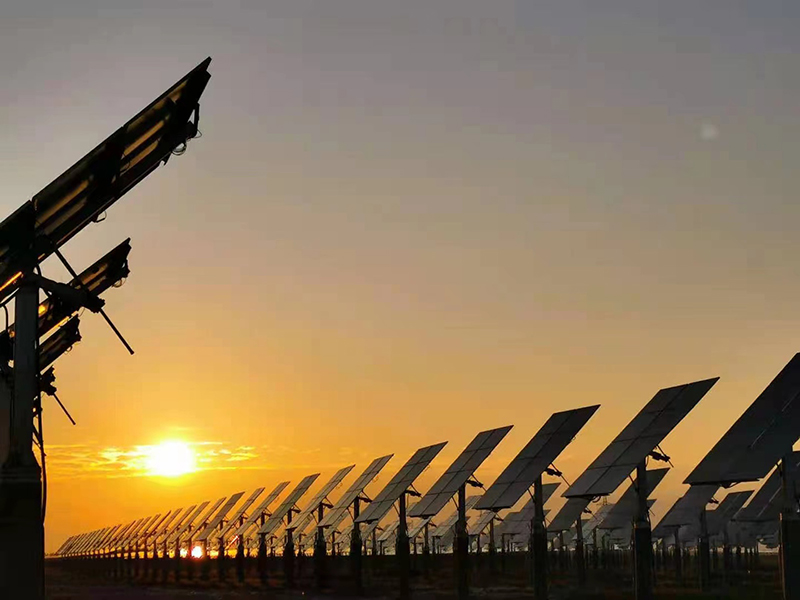
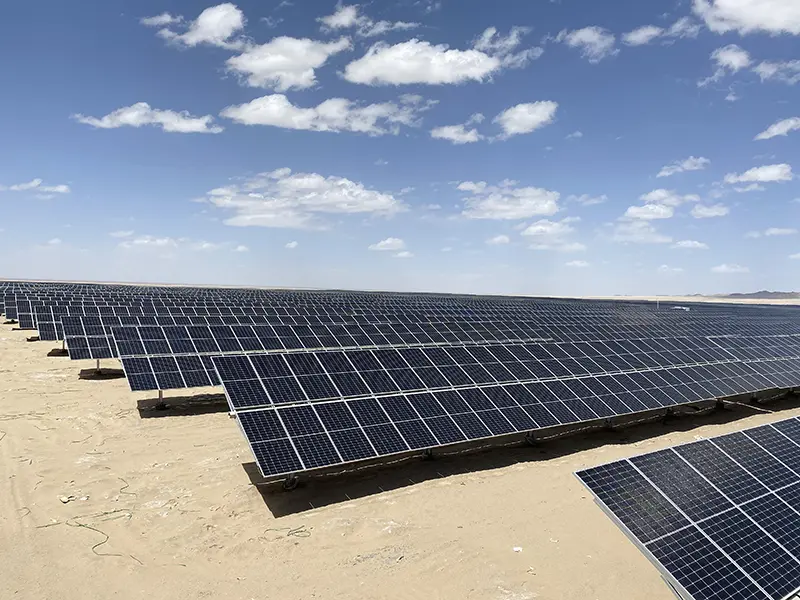
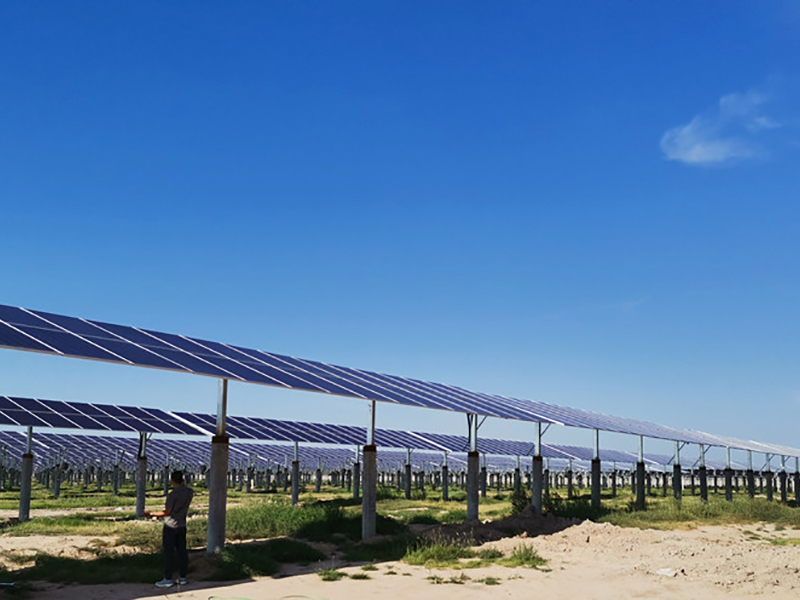
Notable installations include a 50MW SPIC project utilizing manual adjustable fixed mounting systems for seasonal tilt angle variations, a 20MW desert project built to withstand sand scouring and high temperature shifts, and a 110MW utility project in Shanxi leveraging dual-axis solar tracking systems.
Get in touch with our design engineers for customized wind-load analysis, foundation layouts, and direct factory pricing for your upcoming project.
Send Inquiry NowExplore our diverse systems designed for global solar installations.
Our heavy-duty dual-axis tracking system. Features a robust driving system for stable performance in high-yield utility projects.
Optimized for two-portrait module configuration. Minimizes drive motor count per megawatt to balance upfront system costs.

High-torque dual-axis tracking system. Optimizes orientation relative to solar position to maximize energy yield.
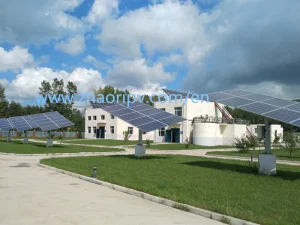
Balances the yield advantages of tracking systems with the structural simplicity of manual systems for improved ROI.
Features robust design parameters, smooth structural rotation, and high resistance to torsional forces from strong winds.
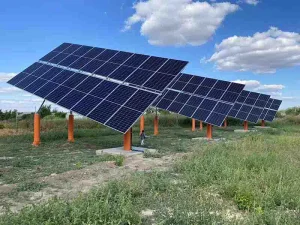
Features a 10° to 30° tilted tracking axis, generating 15% to 25% more energy output than standard fixed systems.
Built with high-yield structural materials and simple manual adjustment mechanisms to perform reliably in coastal environments.
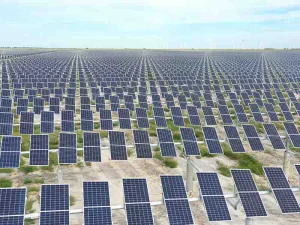
Integrates inclined modules into a flat single-axis structure, combining ground-space efficiency with optimized energy capture.
 Zhaori