Explore our industrial-grade photovoltaic tracking series manufactured in compliance with international engineering standards. Designed for high LCOE performance, extreme weather resilience, and continuous tracking accuracy.
As global energy transitions accelerate toward aggressive net-zero milestones, utility-scale photovoltaic (PV) engineering is undergoing a critical paradigm shift. Energy procurement officers, Engineering, Procurement, and Construction (EPC) contractors, and utility project developers are no longer solely focused on initial capital expenditure (CAPEX). Instead, the key financial metric driving capital allocation is the Levelized Cost of Energy (LCOE) and yield maximization across the 25-to-30-year lifecycle of solar assets.
While fixed-tilt solar mounting structures and single-axis horizontal trackers offer incremental yields, Dual Axis Solar Tracking Systems represent the pinnacle of solar energy capture. By continuously aligning PV module surface angles perpendicular to the sun's direct light rays across both the horizontal zenith (azimuth angle) and vertical elevation axes, dual-axis systems eliminate the cosine losses inherent in fixed setups. This yields an impressive energy production gain of 35% to 45% compared to traditional fixed-tilt arrays, and up to 15% to 20% higher efficiency than standard single-axis trackers.
Sourcing these complex electromechanical tracking systems requires partner reliability, engineering precision, dynamic structural analysis, and scale. As a global tier-1 manufacturer, Shandong Zhaori New Energy Tech. Co., Ltd. bridge high-capacity automated production with state-of-the-art closed-loop astronomical algorithm control systems, delivering wholesale supply solutions optimized for extreme atmospheric environments, wind dynamic stability, and bifacial module integration.
One of the core technological breakthroughs introduced by Shandong Zhaori New Energy Tech. Co., Ltd. (Sunchaser Tracker) is our proprietary hybrid control architecture. Traditional dual-axis trackers relying purely on optical sensors frequently suffer from visual confusion during heavy overcast, diffuse light, or sandstorm conditions, leading to inefficient drive cycles or angle drift.
Our microprocessors integrate GPS/GNSS geographic coordinates combined with precise astronomical formulas to calculate the sun’s position down to a fraction of a degree. This guarantees 100% accurate tracking regardless of weather, fog, cloud cover, or ambient shading.
Utilizing high-torque enclosed worm gear slewing drives and dual-acting hydraulic/actuator arms, our systems (such as the ZRD-08 and ZRD-10) resist violent torsional flutter. Structurally validated in wind tunnel testing up to 160 km/h (45 m/s).
Integrated backscattering algorithm offsets panel pitch angles dynamically during early morning and late afternoon hours. This boosts rear-side irradiance capture (albedo gain) by an extra 8% to 15% when paired with N-type TOPCon or HJT bifacial panels.
| Tracking Technology | Energy Yield Gain | Wind Load Resilience | Terrain Flexibility | O&M Complexity |
|---|---|---|---|---|
| Dual Axis Tracking (ZRD Series) | +35% to +45% | Automated Active Stow Mode (Storm/Snow Protection) | Extremely High (Slope & Irregular Sites) | Low (Self-Lubricating Bushings & Remote Modbus SCADA) |
| Tilted Single Axis (ZRT Series) | +15% to +25% | Moderate-High Torsional Resistance | Moderate (Requires East-West Alignment) | Low-Moderate |
| Flat Single Axis 1P/2P (ZRP Series) | +15% to +30% | High (Multi-Point Drive Dampers) | High (North-South Slope Adaptable) | Low |
| Fixed Tilt Brackets | Baseline (0%) | High Structural Rigidity | Low (Requires Extensive Terracing) | Minimal Maintenance |
For international wholesalers, solar EPCs, and utility developers, securing a supply partner with robust production capacity and stringent quality controls is essential to mitigating project delivery risks. Shandong Zhaori New Energy Tech. Co., Ltd. operates at the epicenter of China’s solar manufacturing ecosystem.
Founded in June 2012, our facility houses 10 specialized divisions including R&D, structural engineering, quality assurance, and foreign trade. Driven by over 300 skilled production technicians and 60+ technology engineers, our facility delivers uncompromised product consistency.
Outfitted with high-precision heavy equipment—including CNC machine tools, industrial fiber laser cutters, high-speed plasma cutters, and automated robotic welding cells—our dozens of dedicated assembly lines support massive utility-scale order volumes.
Every structural beam, slewing bearing, drive tube, and bracket undergoes raw material screening, precision cold-bending, automatic welding, and full-immersion hot-dip galvanizing (HDG) per ISO 1461 standards to ensure 25+ years of zero-corrosion structural integrity.
Navigating cross-border solar procurement demands compliance with rigorous global grid codes, safety directives, and structural engineering certifications. Shandong Zhaori New Energy tech guarantees smooth international execution through an extensive intellectual property and compliance footprint.
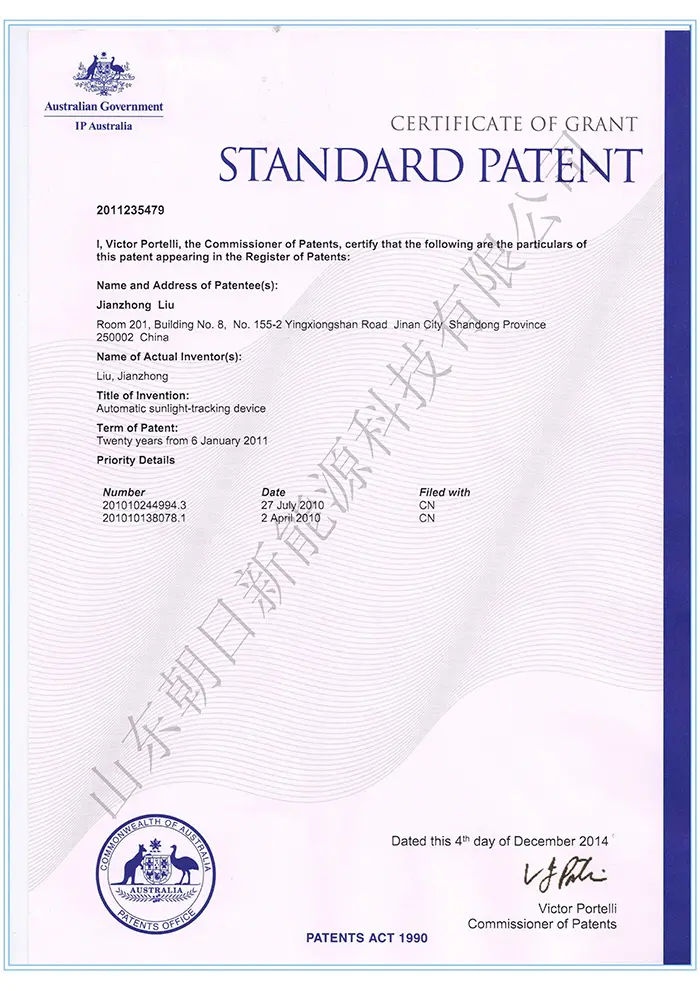
We hold prestigious invention patents granted by the European Patent Office (EPO), United States Patent and Trademark Office (USPTO), Canada, Australia, Japan, South Korea, Thailand, India, Brazil, and South Africa, alongside 8 Chinese National Invention Patents and over 30 Utility Model patents.
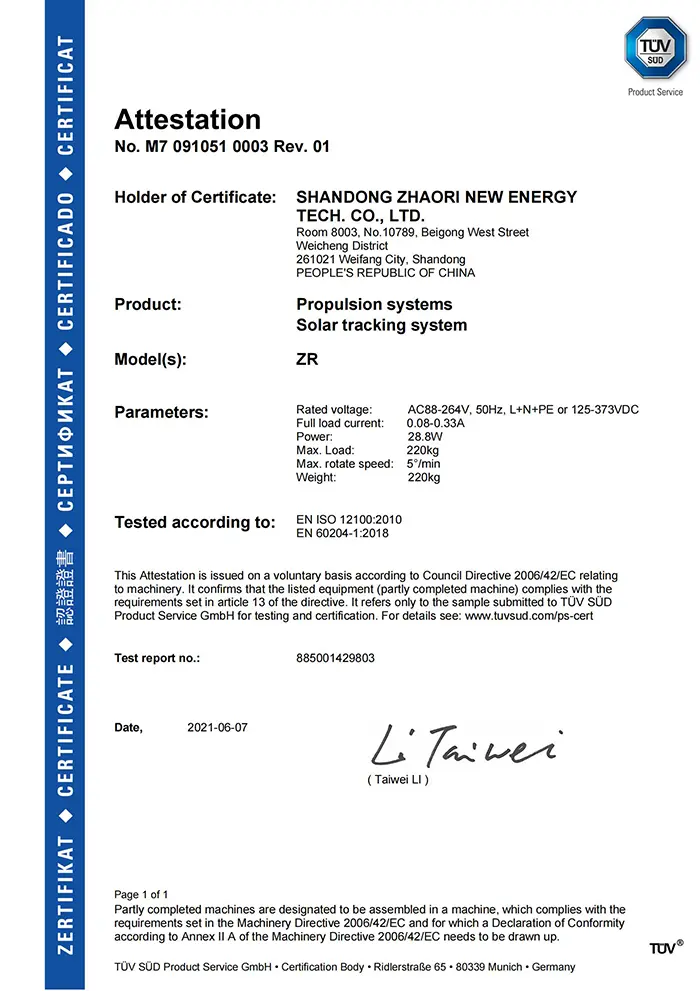
Our complete dual-axis and single-axis tracking systems are certified under TÜV Rheinland, CE Mark, ISO 9001 (Quality Management), ISO 14001 (Environmental), and ISO 45001 (Occupational Health), complying with IEC 62817 structural tracker standards.
From pre-feasibility 3D CAD ground-load modeling and wind dynamic analysis to field installation assistance and remote SCADA commissioning, our engineering department provides end-to-end technical support for international EPC buyers.
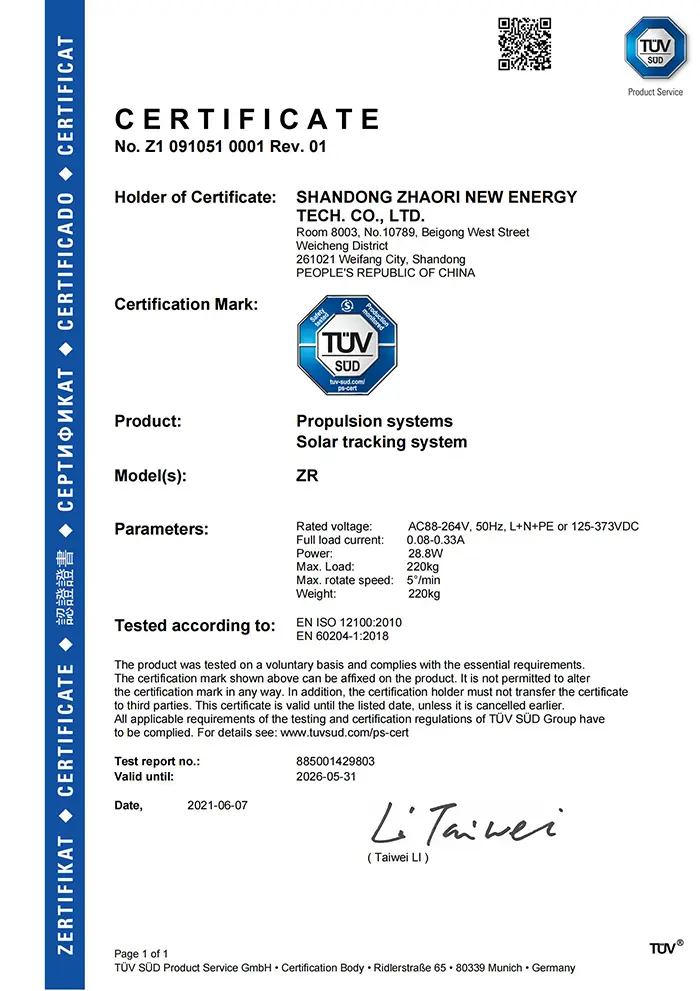
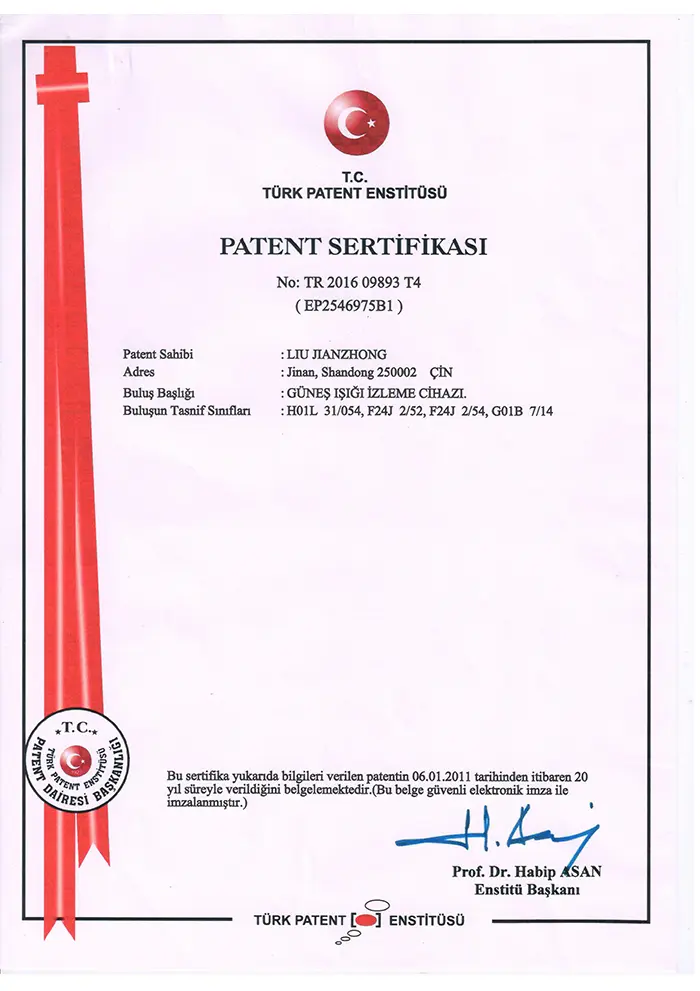


Dual-axis tracking systems engineered by Shandong Zhaori New Energy Tech are tailored to withstand extreme environmental challenges across distinct geographical zones.
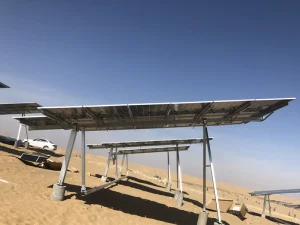
Desert solar power stations face severe airborne dust accumulation and thermal cycles. Our trackers incorporate automated 90° night-tilt self-cleaning routines that minimize dust settling and sandstorm resistance modes.
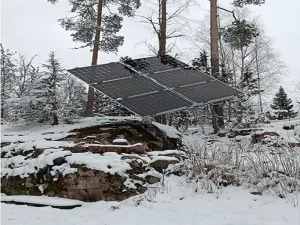
In high-latitude regions, heavy snow loads reduce panel output and cause structural failures. Our micro-controller executes automated high-angle snow-dumping procedures to prevent snow accumulation build-up.
Unlike flat single-axis systems that require horizontal land levelling, dual-axis trackers feature independent single-post foundations. This makes them ideal for steep slopes, rolling hills, and brownfield installations.
With tall clearance options (3m to 5m ground clearance), our trackers accommodate agricultural machinery movement underneath, supporting combined crop farming, livestock grazing, and solar power generation.
With multi-gigawatt installations deployed across North America, Europe, Asia-Pacific, and the Middle East, our tracker solutions deliver continuous operational reliability in diverse microclimates.
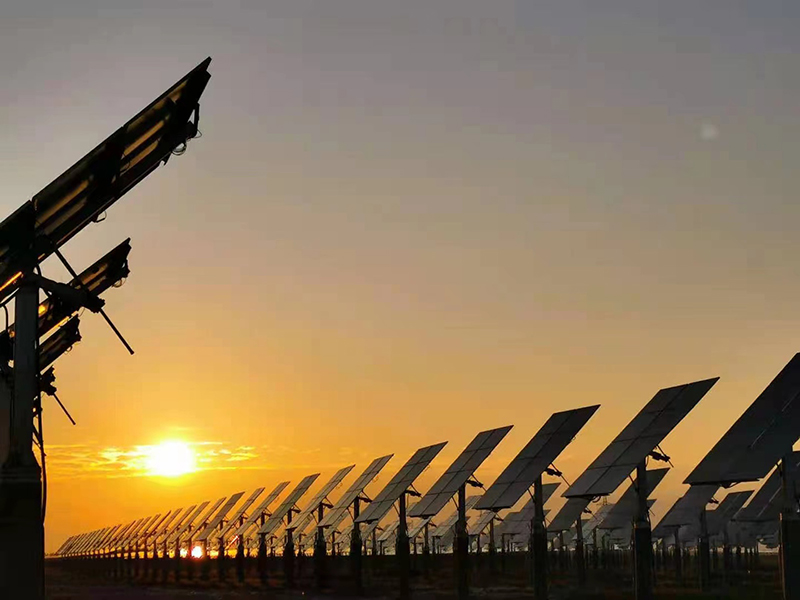
5MW Utility Tracker in North China
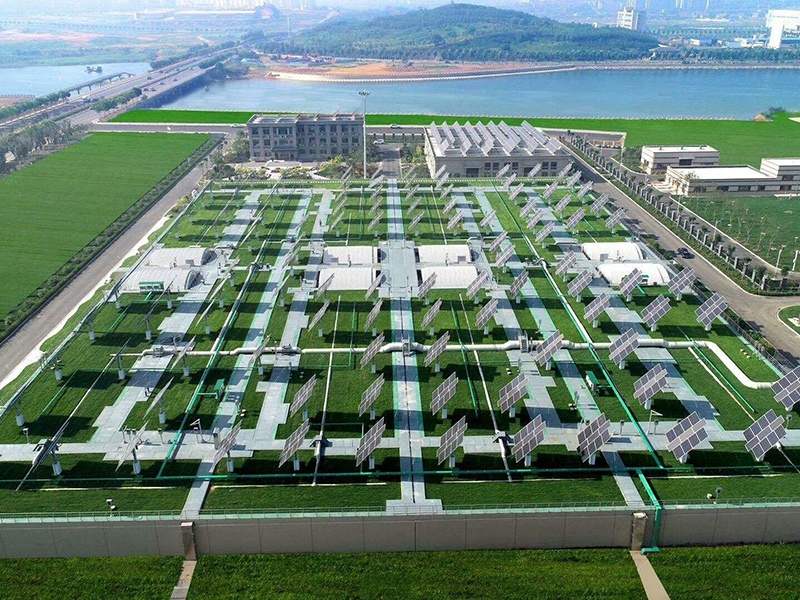
Commercial Factory Roof/Ground Installation
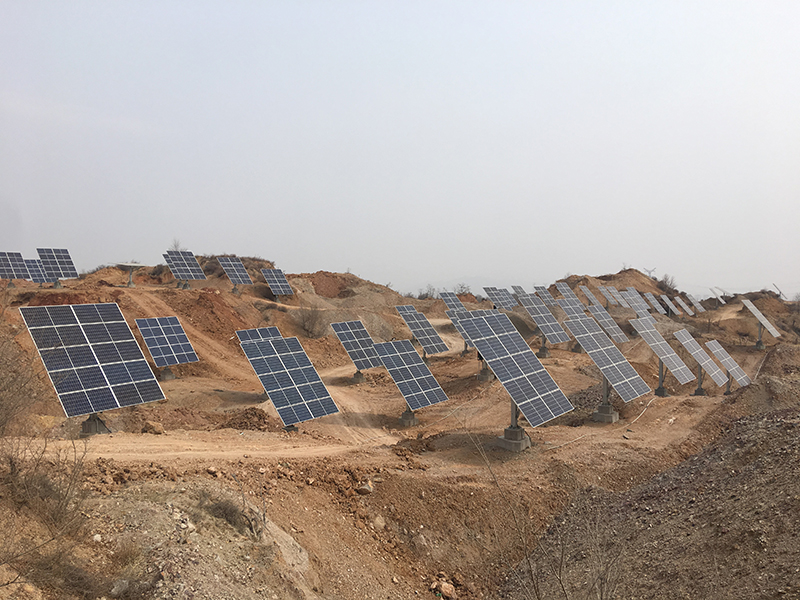
Mountain Terrain Dual Axis Installation
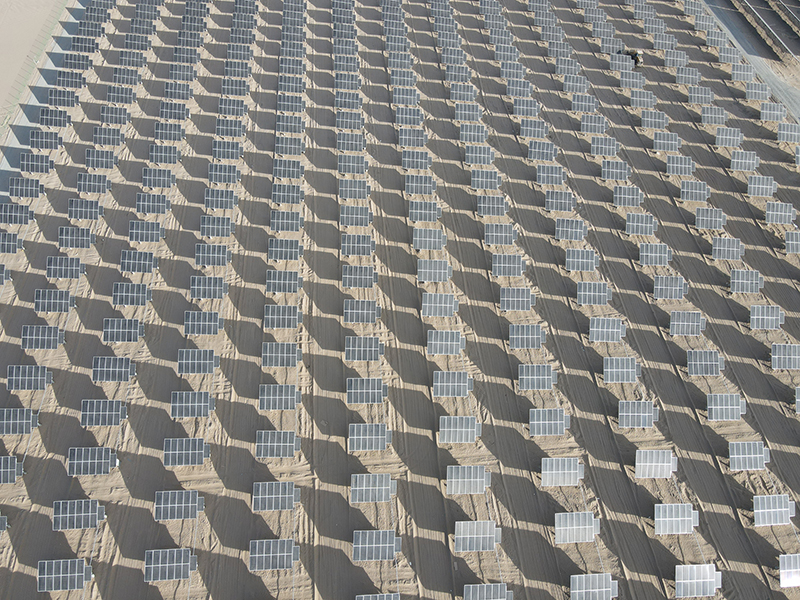
20MW Tilted Single Axis Tracker in Desert
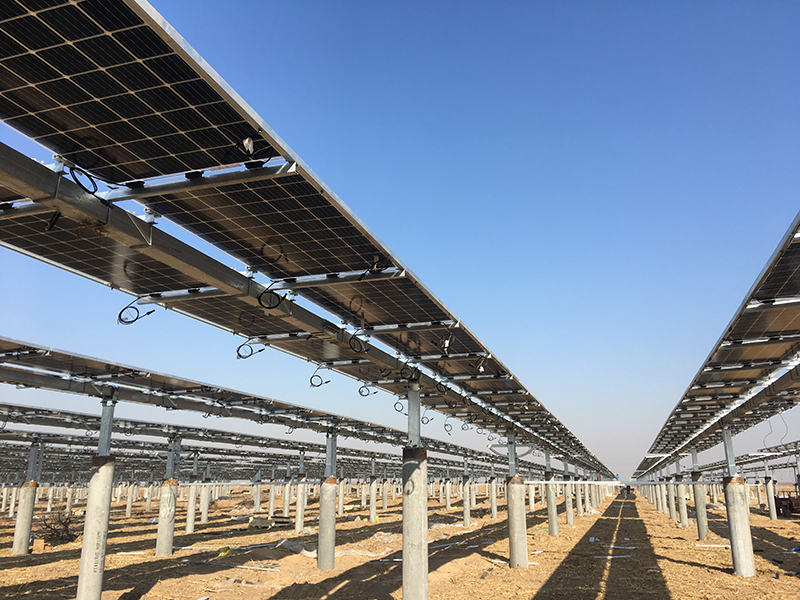
110MW Bifacial Module Integrated System
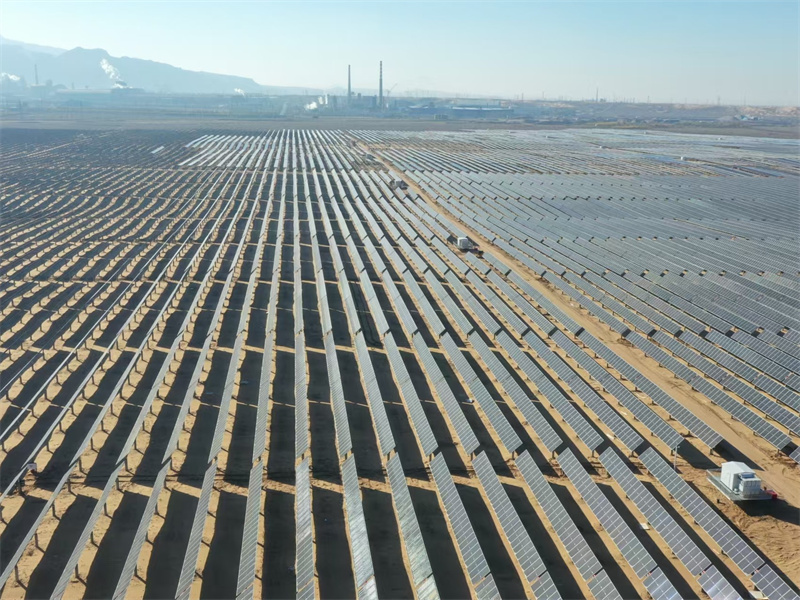
360MW Mega Utility Tracker Field
Watch our solar tracking systems operating live across real-world utility projects, demonstrating automatic dynamic stow capabilities, high-wind protection, and dual-axis precision tracking.
The solar tracking industry is evolving beyond basic motorized movement toward fully integrated digital intelligence. Key technological trends reshaping global PV procurement include:
Machine learning neural networks analyze real-time satellite solar irradiance data and local weather feeds, dynamically adjusting panel angles during overcast weather to capture maximum diffuse sky radiation.
Replacing traditional control cabling with low-power wireless mesh networks reduces installation labor costs by up to 30%, while offering node-level diagnostics and real-time operational monitoring.
Incorporating dedicated mini PV backup systems and integrated lithium battery packs ensures that each dual-axis tracker remains 100% operational even during complete grid power outages.
Get immediate answers to common technical, logistics, and commercial questions from EPC buyers, wholesalers, and project managers.
Review our core wholesale product portfolio available for direct factory-direct bulk supply, custom OEM manufacturing, and global EPC deployment.
 Zhaori