Engineered for high structural stability and maximized spatial efficiency across municipal and utility solar installations.
Understanding the shift towards manual adjustable systems in urban and peri-urban Japan.
Tokyo and the surrounding Kanto area represent a unique environment for photovoltaic power systems. Situated in a region prone to high seismic activity, seasonal typhoons, and dense urban configurations, the choice of mounting structures is critical. Unlike automated solar tracking systems which require constant power draw and complex sensor suites that can fail during grid disruptions, **Manual Adjustable Solar Racks** provide a robust, failure-free alternative.
In Tokyo, the winter solar angle sits lower, around 30 to 35 degrees, while summer solar altitude climbs to nearly 78 degrees. Utilizing fixed racking limits generation potential. However, manually adjusting the racking tilt three to four times a year to transition between 15° (summer), 35° (autumn/spring), and 45° (winter) captures up to 15% to 25% more energy. This manual modification completely avoids the mechanical risk points of motorized units, rendering it highly resilient under Japan’s strict building codes (**JIS C 8955** structural standards for solar installations).
“Under the revised Feed-in Premium (FIP) guidelines in Japan, maximizing solar yields without adding mechanical complexity or high operational expenditures (OpEx) is crucial. Manual adjustable racks offer the perfect balance between enhanced yield and long-term mechanical reliability.”
Worldwide, utility developers are grappling with increasing land costs and grid integration challenges. Ground-mounted systems must adapt to varying topographies and severe weather. The global market is bifurcating into two directions: highly sophisticated astronomical tracking arrays for dry, flat deserts, and simple, heavy-duty manual adjustable systems for regions with extreme wind, snow load, and high maintenance costs.
Shandong Zhaori New Energy Technology Co., Ltd. has developed specialized manual adjustable fixed brackets that reduce installation time by up to 30%. Utilizing high-strength structural profiles with robust hot-dip galvanization or Zn-Al-Mg (Zinc-Aluminum-Magnesium) coatings, these structures are specifically built to withstand coastal environments like Tokyo Bay, preventing rust and chemical degradation for over 25 years.
Founded in **June 2012**, Shandong Zhaori New Energy Tech. Co., Ltd. has established itself as an innovative pioneer in the solar mounting and tracking industry. Driven by independent intellectual property rights and an intense focus on engineering excellence, the company operates **10 dedicated departments** including R&D, Technical Design, Production, QA, and Foreign Trade, employing over **60 professional technical innovators**.
With over a decade of dedication to photovoltaic power plant design and solar tracking technology, our products have successfully obtained invention patents across global markets, including the **European Patent Office, USA, Canada, Australia, Japan, South Korea, India, and South Africa**, alongside 8 Chinese National Invention Patents.
Our core product philosophy centers on simplicity, reliability, and cost-effectiveness. By eliminating unnecessary moving components and optimizing structural profiles, we offer high-yield solar solutions designed for the long term.
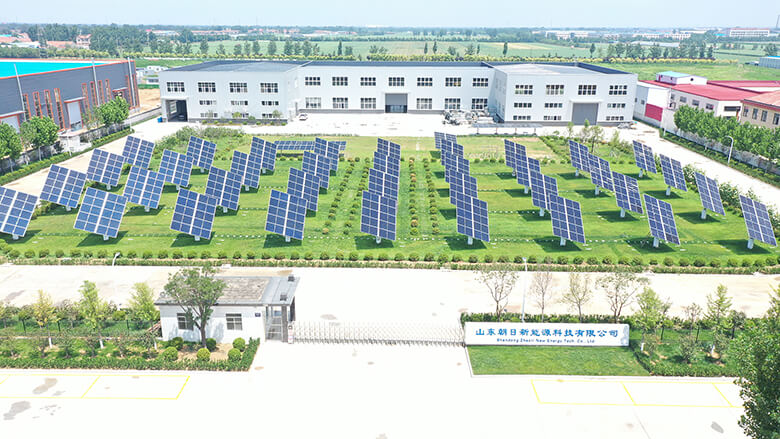
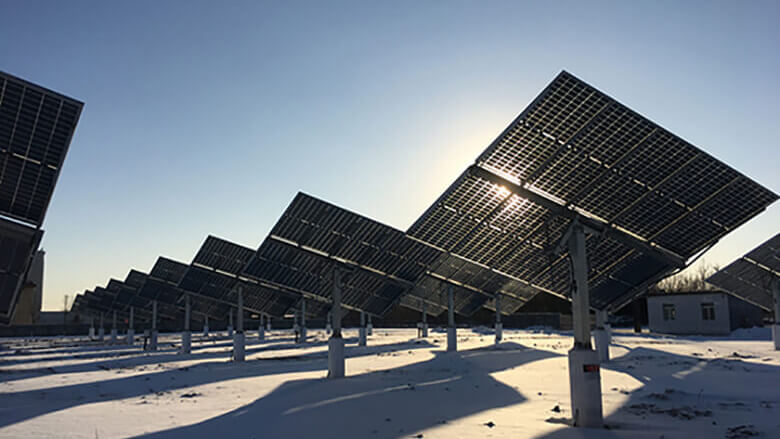
Our manufacturing facility spans over **50,000 square meters**, housing a fleet of advanced production machinery. From CNC machine tools and high-precision laser cutting machines to automatic welding robots, plasma cutters, and dozens of specialized roll-forming lines, we ensure high quality at every production step.
With over **300 skilled production workers**, we maintain a stable monthly manufacturing throughput of **500MW**. Our quality assurance protocols follow strict parameters, tracing every piece from initial raw material screening and mechanical testing to precision cutting, robotic welding, hot-dip zinc coating, and final packaging.
All fabrication procedures align directly with the international requirements of ISO 9001, CE, and TUV certifications. We provide Tokyo utility and industrial developers with the peace of mind that our racks will withstand localized wind speeds up to 45m/s as outlined in Japanese building regulations.
How specialized engineering overcomes geological and environmental challenges in Japan.
Tokyo outskirt locations, such as the Chiba, Saitama, and Kanagawa prefectures, feature hilly terrains and uneven land parcels. Our manual adjustable brackets utilize modular, independent designs. This allows developers to set up solar subarrays at different elevations and configurations. Unlike long, rigid single-axis trackers that require flat land, these systems fit naturally along the contours of the landscape, avoiding expensive site grading.
During the autumn typhoon season or winter heavy snowfalls in western Tokyo (Tama region), solar modules are exposed to severe mechanical loads. Our brackets feature reinforced locking pins and dual-point bracing mechanisms. When extreme weather warnings are issued, technicians can quickly set the racks to a flat tilt (0° to 10°) to minimize wind uplift, or tilt them steeply (45°) to prevent snow accumulation, protecting the system from structural damage.
Bifacial PV modules are quickly becoming the industry standard due to their ability to collect reflected light from the ground (albedo effect). Our manual adjustable designs minimize backside structural shading. By keeping the support beams away from the rear of the modules, we help you maximize energy yields, especially when installed on high-albedo surfaces like concrete roofs or light gravel.
Select from our complete range of certified mounting structures and smart trackers, optimized for the Japanese market.
Answers to key engineering, regulatory, and mechanical questions for developers in Japan.
Active tracking systems rely on electric motors, sensors, and continuous power, which increase maintenance costs and present failure points during earthquakes or typhoons. Manual adjustable racks offer structural stability, wind resistance, and zero operating costs. Their high reliability makes them ideal for Japan's strict safety standards and disaster-preparedness plans.
Yes. Our structures are engineered to comply with local wind load parameters (up to 45m/s) and seismic coefficients required by Japan’s building codes. We use high-tensile hot-dip galvanized steel and Zn-Al-Mg coatings to ensure long-term corrosion resistance in the humid, salt-mist coastal environment of Greater Tokyo.
For projects in Tokyo, adjusting the tilt angle 3 to 4 times a year is optimal. We recommend setting the system to 15° in spring and summer to maximize output from the high midday sun, and adjusting to 35° or 45° in autumn and winter to capture low-angle sun rays and facilitate snow shedding.
Our pre-assembled structural components and slip-fit linkages reduce on-site assembly steps. Under typical ground-mount conditions, a standard crew can install 1MW of racking in approximately 10 to 12 working days, which is roughly 25% faster than complex automated tracker systems.
Yes, our engineering department provides comprehensive calculation reports, including wind load analysis, seismic resistance assessments, foundation load specifications, and certificate copies for METI (Ministry of Economy, Trade and Industry) and local municipal applications in Japan.

High-Quality Flat Single Axis Solar Tracking System Suppliers, Companies


Buy ZRD-10 Dual Axis Solar Tracking System Supplier, Pricelist


Famous Semi-auto Dual Axis Solar Tracking System Supplier, Quotes

Best ZRD-08 Dual Axis Solar Tracking System Supplier, Suppliers


China Flat Single Axis tracker with Inclined Module Supplier, Product

Famous ZRT-16 Tilted Single Axis Solar Tracking System Quotes, Product

Best Tilted Single Axis Solar Tracking System Quotes, Companies
 Zhaori