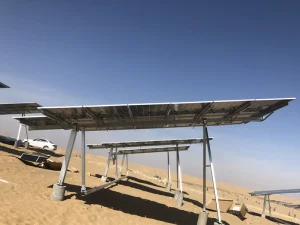
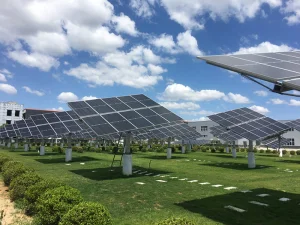
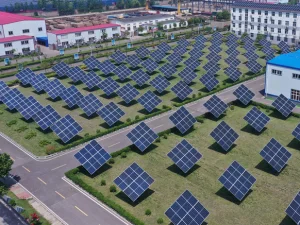
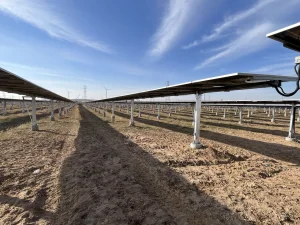
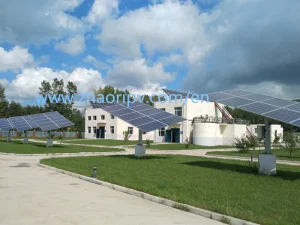
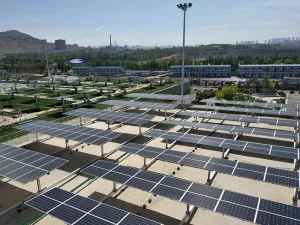
As the economic heartbeat of Indonesia, Jakarta is standing at a pivotal crossroads of energy transformation. With the Indonesian government's commitment to achieving Net Zero Emissions by 2060, the Greater Jakarta area (Jabodetabek) has become the primary laboratory for large-scale commercial and industrial (C&I) solar adoption. The unique tropical climate of Jakarta—characterized by high irradiance but significant cloud cover and humidity—demands solar mounting solutions that go beyond traditional fixed-tilt systems.
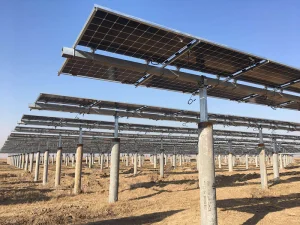
Tilted Single Axis Trackers (TSAT) have emerged as the "Goldilocks" solution for the Jakarta market. Unlike standard horizontal trackers, TSAT systems are specifically engineered to optimize the angle of incidence in regions closer to the equator. For a city located at approximately 6° South latitude, the "Tilt" factor allows for an additional 15% to 25% energy yield gain by reducing cosine losses during the morning and late afternoon hours, where Jakarta’s urban smog or tropical haze often diffuses sunlight.
The roadmap for solar tracking in Southeast Asia is shifting from mechanical robustness alone toward "Intelligent Resilience." Shandong Zhaori New Energy is leading this shift by integrating AI-driven backtracking algorithms. In the densely built industrial zones of Bekasi or Tangerang (surrounding Jakarta), land is a premium. Our Tilted Single Axis systems utilize smart sensors to adjust tilt angles in real-time, preventing row-to-row shading—a critical feature when maximizing GCR (Ground Coverage Ratio) in expensive urban plots.
Looking forward, the roadmap includes seamless compatibility with bifacial N-type TOPCon modules. The albedo effect from Jakarta's industrial rooftops or treated ground surfaces can be fully captured by our elevated TSAT designs, which provide the necessary clearance for rear-side light absorption. This synergy between tracker and bifacial module is the next frontier for LCOE (Levelized Cost of Energy) reduction in the Indonesian market.
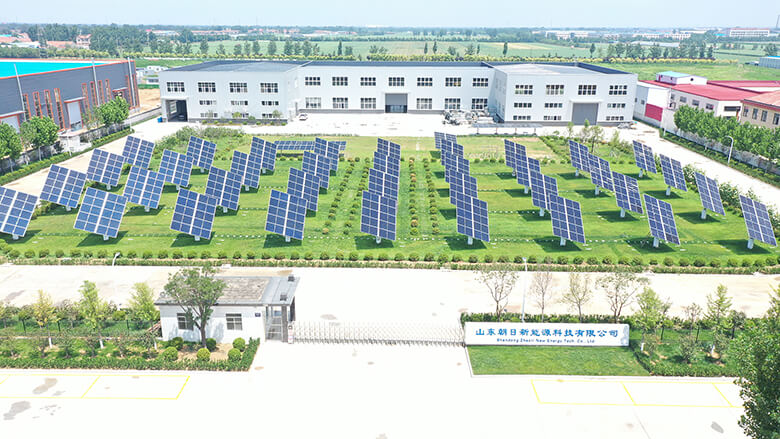
In an era of global supply chain volatility, the "China Factory 4.0" model represents more than just manufacturing—it represents a guarantee of project bankability. Our factory, spanning over 50,000 square meters, utilizes automatic welding robots and CNC laser cutting to ensure every component of the Tilted Single Axis Tracker meets micron-level tolerances.
For Jakarta-based EPCs and developers, this means precision-engineered parts that fit perfectly upon arrival, reducing on-site labor costs—a significant advantage given the logistical complexities of the Tanjung Priok port. Our "Supply Chain Resilience" is built on deep integration: from raw material screening to post-processing anti-rust treatments (crucial for Jakarta’s coastal, saline-rich air), we control every step to ensure a 25-year service life.
We do not just sell brackets; we provide holistic energy solutions. In the Jakarta market, we offer localized engineering support that accounts for Indonesia's specific building codes (SNI) and seismic requirements. Jakarta sits on a basin prone to seismic activity; therefore, our Tilted Single Axis Trackers are designed with high-damping ratios and reinforced foundations to ensure structural integrity during tremor events.
Furthermore, we assist global enterprises in navigating the TKDN (Tingkat Komponen Dalam Negeri) landscape. By providing high-quality core components and technical expertise, we help our partners optimize their local content requirements to qualify for government-backed tenders and PLN (Perusahaan Listrik Negara) projects.
Entering the Indonesian market requires a deep understanding of local regulatory nuances. Shandong Zhaori New Energy has invested years in obtaining international certifications such as TUV, CE, and ISO, while also respecting the specific technical demands of the Indonesian MEMR (Ministry of Energy and Mineral Resources). Our team provides on-site supervision and O&M training for local Jakarta engineering teams, ensuring that the "Knowledge Transfer" is as valuable as the hardware itself.
This commitment to E-E-A-T (Experience, Expertise, Authoritativeness, and Trustworthiness) is reflected in our 10-year track record. We have survived and thrived through various market cycles, consistently delivering systems that withstand the monsoons and high temperatures of Java Island.
Shandong Zhaori New Energy Tech. Co., Ltd. is a high-tech and new energy company based on independent intellectual property rights. Founded in June 2012, our team focuses on photovoltaic power stations and solar tracking technology for more than 10 years. With 10 dedicated departments including R&D, Quality Assurance, and Foreign Trade, we employ over 60 professional technology talents to serve the global market.
Our principle is "More Simple, More Reliable, More Effective." This philosophy ensures that even in complex markets like Jakarta, our products remain easy to install and maintain over decades.
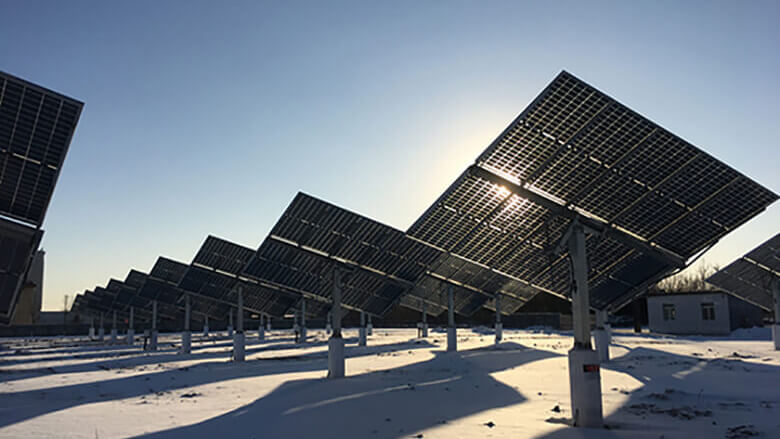
A: Jakarta's latitude (~6°S) means a flat tracker loses significant efficiency at certain times of the year. The "Tilt" compensates for the sun's seasonal North-South migration, providing a more consistent and higher total annual energy yield compared to purely horizontal systems.
A: All our trackers undergo hot-dip galvanization (HDG) with a minimum coating thickness designed to withstand C4/C5 corrosive environments. This is essential for projects near the Jakarta coastline to prevent premature structural failure.
A: Yes, we provide technical documentation and work with local Indonesian partners to maximize the local component percentage, helping your project meet the necessary regulatory thresholds for PLN and other government entities.
A: With our monthly production capacity of 500MW, we can typically complete manufacturing for a 10MW project within 3-4 weeks. Shipping to Tanjung Priok, Jakarta, usually takes an additional 2-3 weeks depending on vessel availability.
 Zhaori